
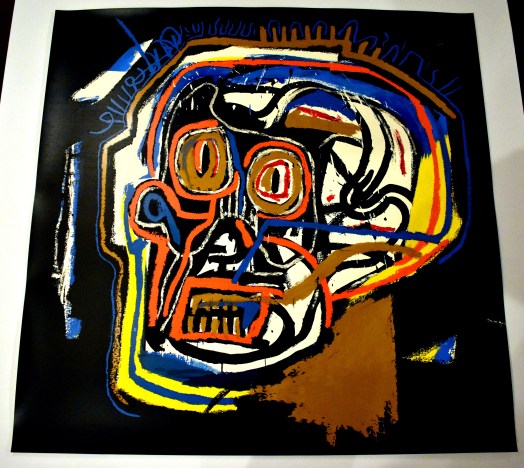
 This painting by Jean-Michel Basquiat, untitled, was one of many heads that the artist painted during his short life. This one in particular jumped out at me because of the frenetic nature of the lines, the fearful look in the eyes, and the apparent gnashing of the teeth. I believe that’s how many people walk around since 2016, and I’m not sure how much longer we can keep it up. The planet itself seems ready to explode sometimes. Maybe I should stick with paintings of flowers and breakfast in bed from now on.
Art as Identity
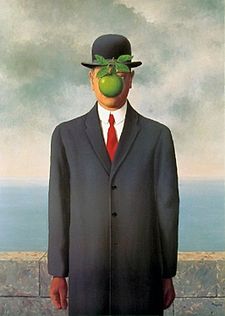
This is Rene Magritte’s painting, “The Son of Man.” I bet most people don’t know the name of it, they just know the green apple (which is my fave, by the way). Sorry, no provocative genitalia this week, just a poor guy standing next to a body of water with an apple stuck to his face. What does it mean? Okay, here are two things: Magritte often painted apples in his art, which was classified as “surrealist.” Also, this was a self-portrait painted in 1964. If it had been done more recently, I might have thought there could be a commentary about people with their noses stuck in their phones all the time, but that’s rather simplistic and way out of the timeline.
There are other paintings by Magritte in which objects obscure the face of the subject (a bird, some flowers), and if you look closely at this one, the eyes are visible, especially the one on the right. So there’s some commentary about the parts of ourselves that we hide, and what we choose to show to the world. And then there is an entire religious aspect to the painting, which is primarily apparent because of its name, “The Son of Man,” referring to Jesus. Huh? You see how people can spend their careers talking about this stuff, writing dissertations and making more out of a piece of art than perhaps the painter intended. At least that’s what I think. But what do I know?
I just think it’s a cool painting.
The Art of the Cup

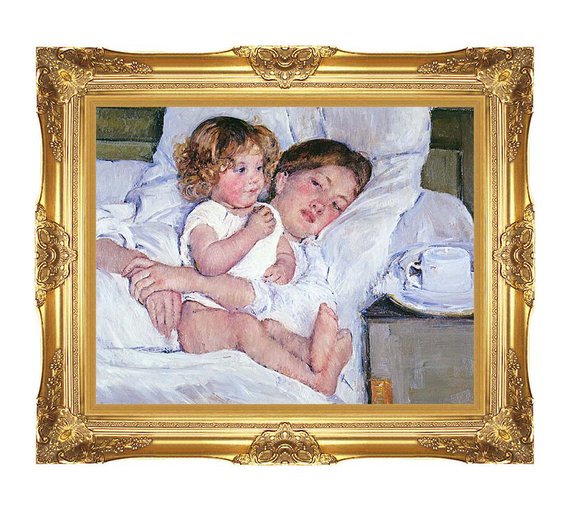
Since we seem to be working on a theme this week, purely by chance, I thought I’d round up the blog with a painting by Mary Cassatt from 1897, entitled Breakfast in Bed. The photo above is the detail of just the cup, which actually looks rather unfinished and rough. But when you see it in the context of the entire painting, it works (see below). Mary Cassatt was not taken seriously by her peers; you know, that “woman thing,” but her paintings are lovely and replete with lush colors and depth. Enjoy this one, and think about indulging yourself in a little reclining repast.
#marycassatt #breakfastinbed #motherandchildart
Glorious Reds
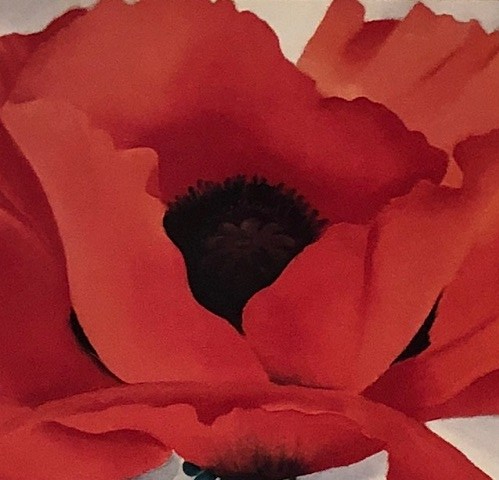
Probably one of Georgia O’Keeffe’s most famous images, this glorious red poppy is a real surprise when you see the actual painting hanging in a museum. It’s not really much bigger in the flesh. Really. With such a bold image and color, I was expecting to be blown away by this one, but there it was on the wall of the Metropolitan Museum of Art: a little painting, in a big gold frame. It still drew me in, mesmerizing with its color and beauty. But delicate and small, at the same time that it was lush and bold. I was a kid then, on a trip to the “big city,” but the sight of this flower has never left me. That’s art. Burned onto the inside of your eyeballs, keeping you coming back for more.
#cassielovesokeeffesflowers #redpoppiesrule #artiscoolandhot
Art Stuff

“Anniversary,” by Norman LaLiberte, circa 1998, is a fine example of the colorful style employed by the Franco-American artist. Born in Worcester, Mass., to Canadian parents, LaLiberte has attained notoriety on both sides of the border with his whimsical paintings, banners, and sculptures. The childish delight one can see in his work, along with the mix of Cubism and hints of Chagall’s cut-outs, create challenges for the viewer. LaLiberte’s travels around the world are often reflected in his works as well, with elements of Egyptian and Asian influences appearing, as well as his continued fascination with birds, fruit, and the human form.
#artstuff #normanlaliberte, #laliberte, #whimsicalart
And Now for the Boobs
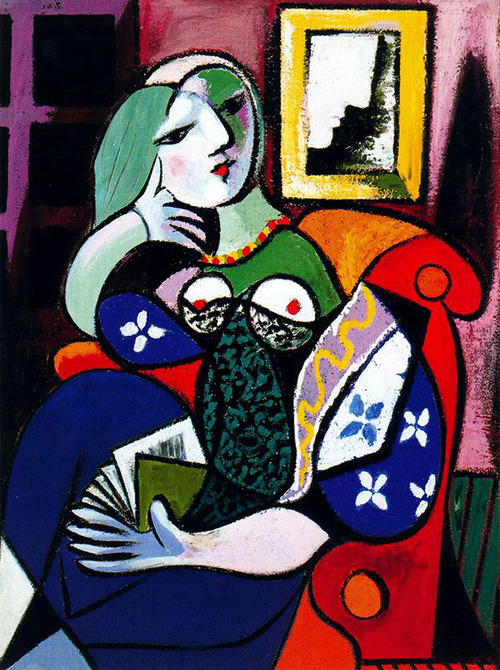
So this is Picasso. “Woman with a Book,” although I doubt that is what the old man was really focused on. People spend lots of time analyzing the work of this artist, the sociological context, the historical importance, the groundbreaking originality, etc. This is one of the more straightforward and less obscene pieces…. It’s just Cubism, you know. It was a Big Deal back in the day. And some of Picasso’s works are pretty significant, if you can get past the misogyny. The Picasso approach: Take an image of a woman, break it down into a pile of body parts, then scramble and reassemble the figure as you like, to become whatever suits your fancy. Call it “Art.”
#CassieThorntonMysteries; #PicassoWomanWithABook; #Cubism; #CassieTalksArt; #ArtStuff
The Big Boy (so to speak)
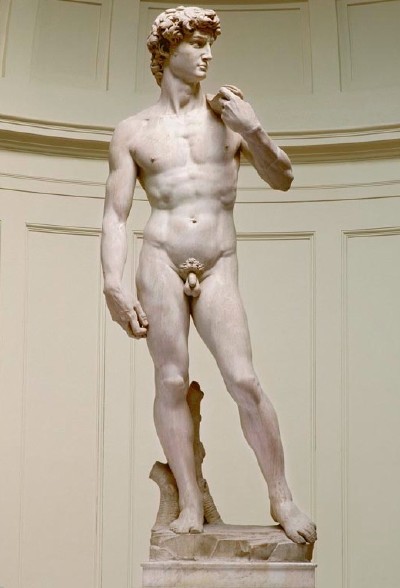
So I know, we go from the prim and proper Mona Lisa to the naked guy, right? But he’s a classic by Michelangelo, and one of the major dudes in my Art History class, “Boobs and Dicks All Over the Place.” It’s a popular class; even the jocks take it to satisfy their Humanities requirements. I figure, if you can find a way to engage the students, they might end up learning something and there’s actually a slim chance that one or two will be inspired to continue with the study of Art History and maybe more. So why not have fun with it? I know it drives the department heads crazy, but they can’t do much about it because the class is always over-enrolled. My bad!
 Cassie Thornton's Life, Loves, and the Tarot